Chapter 9 of 11
Storing belongings during urban renewal: volume, time and preparation
The flat you rent while waiting is often smaller than your old home, and the new flat will not be ready before the date in the contract. This chapter helps you plan where your belongings wait in between.
Last updated: 1 November 2026
In brief
- The new flat will not be ready before its delivery date, so belongings need somewhere to wait.
- The Law has no reimbursement specifically for storing belongings; the cost is the owner's or tenant's own.
- Estimate volume by listing room by room, and time by taking the contract's delivery date plus a safety margin.
- Whichever provider you choose, see the room, read the contract and ask in writing about term, access and insurance.
Why do belongings need somewhere to wait?
Moving out because of urban renewal often means moving twice: first to a temporary home, then to the new flat. The temporary home is frequently smaller than the old one, and not everything fits.
The Law sets no construction period; it depends on the contract, the permit and the contractor. Rent aid and any lump sums can be spent as you wish, but there is no reimbursement specifically for storing belongings. That cost is the owner's or tenant's own.
How much volume and how much time do you need?
To understand volume, list your belongings room by room: large furniture, appliances, boxes. Thinking of the list in cubic metres makes storage options easier to compare.
For time, take the delivery date in your contract and add a safety margin. Being able to extend the room matters in case of delay, so ask about the maximum term and extension conditions from the start.
What should you store, and what should you keep with you?
Seasonal clothes, books, surplus furniture, trunks and anything you will not use soon suit storage. Papers such as the title deed (tapu), ID and the assessment report, along with medicines, valuable jewellery and daily necessities, should stay with you.
As a general practice, flammable materials and perishable food are not stored. Read each provider's contract to learn what it accepts.
How do you prepare belongings for storage?
Start before the demolition deadline gets close; packing in a hurry increases damage and confusion. When choosing a provider, also ask about damp and ventilation, since a dry environment matters for wooden furniture, books and fabric.
- Dismantle wardrobes, beds and tables; put screws and fittings in a labelled bag and tape it to the matching part.
- Label boxes with the room name and contents; put heavy items in small boxes.
- Pack everything clean and dry; damp fabric and cushions can turn mouldy.
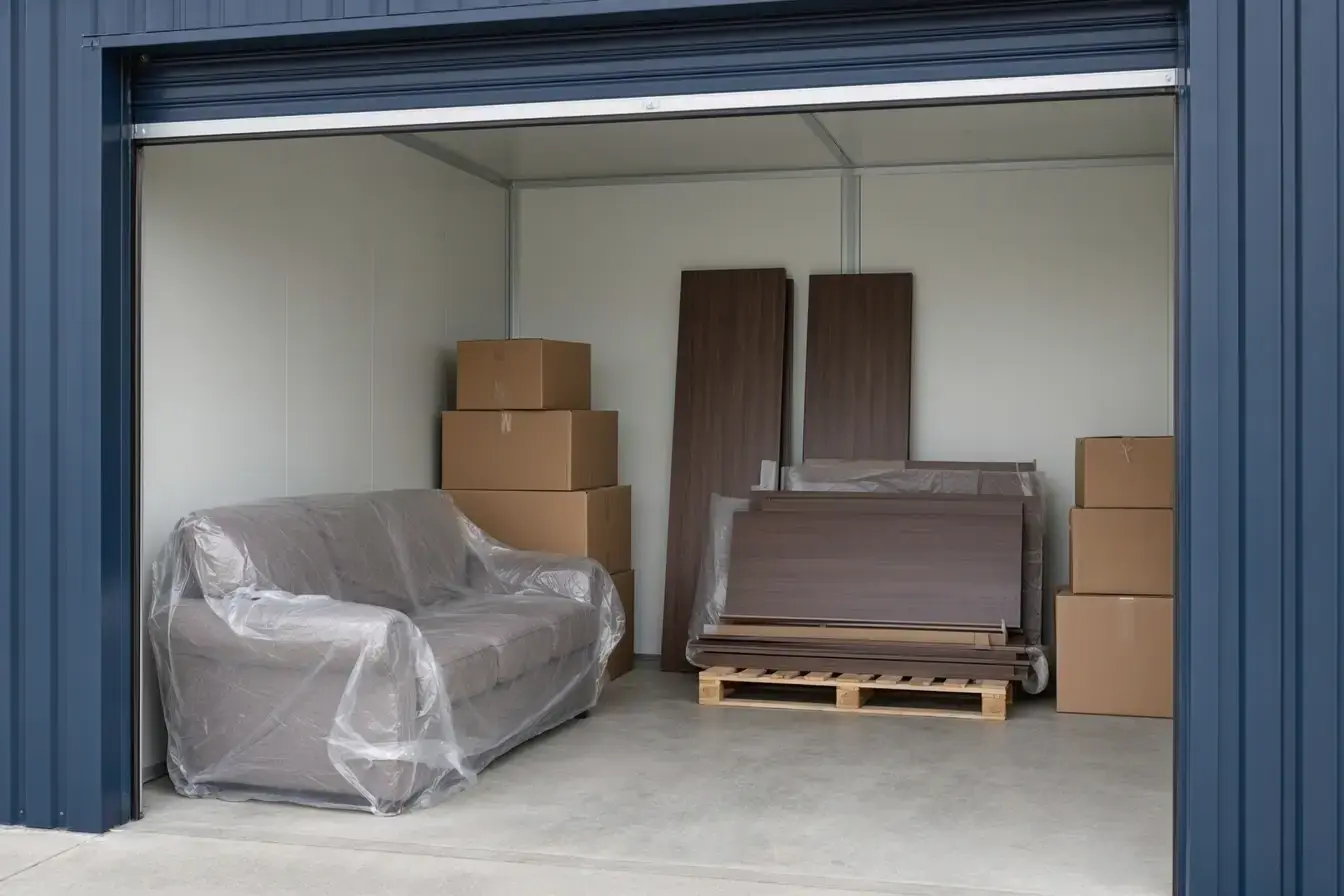
- Cover upholstered items such as mattresses and sofas with protective covers.
- Before handing things over, photograph or film each room and valuable item, and write an inventory list.
How does a room work at Atasoy Depo?
Atasoy Depo offers locked rooms in Sancaktepe (on the Anatolian side). Rooms are usually 8 m³ for a 1+0, 15 m³ for a 1+1, 22 m³ for a 2+1 and 28 m³ for a 3+1. The survey is free, and the team works out together which room your belongings need.
Door-to-door pickup and delivery is available within İstanbul. There is no maximum term, and rooms can be visited any day without an appointment. You may keep the key yourself or leave it with Atasoy Depo. Insurance is optional, offered on request and settled at the survey.
What should you check when choosing any storage provider?
Whichever provider you use, do not leave the questions below unanswered. This chapter is general information and not legal advice; for questions about your own process, contact your municipality (İdare), the Urban Transformation Directorate (Kentsel Dönüşüm Başkanlığı) or a lawyer.
- See the room beforehand and compare its size with your own inventory.
- Read the contract for the term, extension conditions and how it ends.
- Ask about access hours and whether an appointment is needed.
- Ask in writing what the insurance covers and what it excludes.
- Find out who holds the key.
A roadmap for your situation
Four questions show which step you are at, what to prepare and your storage plan.
Need somewhere for your belongings?
See the sizes and prices of the locked rooms, or ask for a free survey.
Frequently asked questions
Does rent aid cover storage costs?
The Law defines no reimbursement specifically for storing belongings. Rent aid and any lump sums can be spent as you wish; the storage cost is yours.
Can I keep the room if construction runs late?
Atasoy Depo has no maximum term. Even so, always check the extension conditions in the contract.
When can I check on my belongings?
Rooms at Atasoy Depo can be visited any day without an appointment. If you are considering another provider, ask about access hours beforehand.
Which room will my belongings fit in?
The flat type alone is not enough; the amount of belongings and the size of the furniture matter too. At the free survey the list is reviewed together.
This guide is general information, not legal advice. For your own case, ask the Urban Transformation Directorate, your municipality or a lawyer.